Traditional SEO vs Generative Engine Optimisation needs Search-First
Traditional SEO vs generative engine optimisation sounds like a tidy debate.
It’s not.
The buyer doesn’t care which acronym won the weekly LinkedIn argument. They care about getting a useful answer and finding a brand they can trust.
Traditional SEO vs Generative Engine Optimisation explained
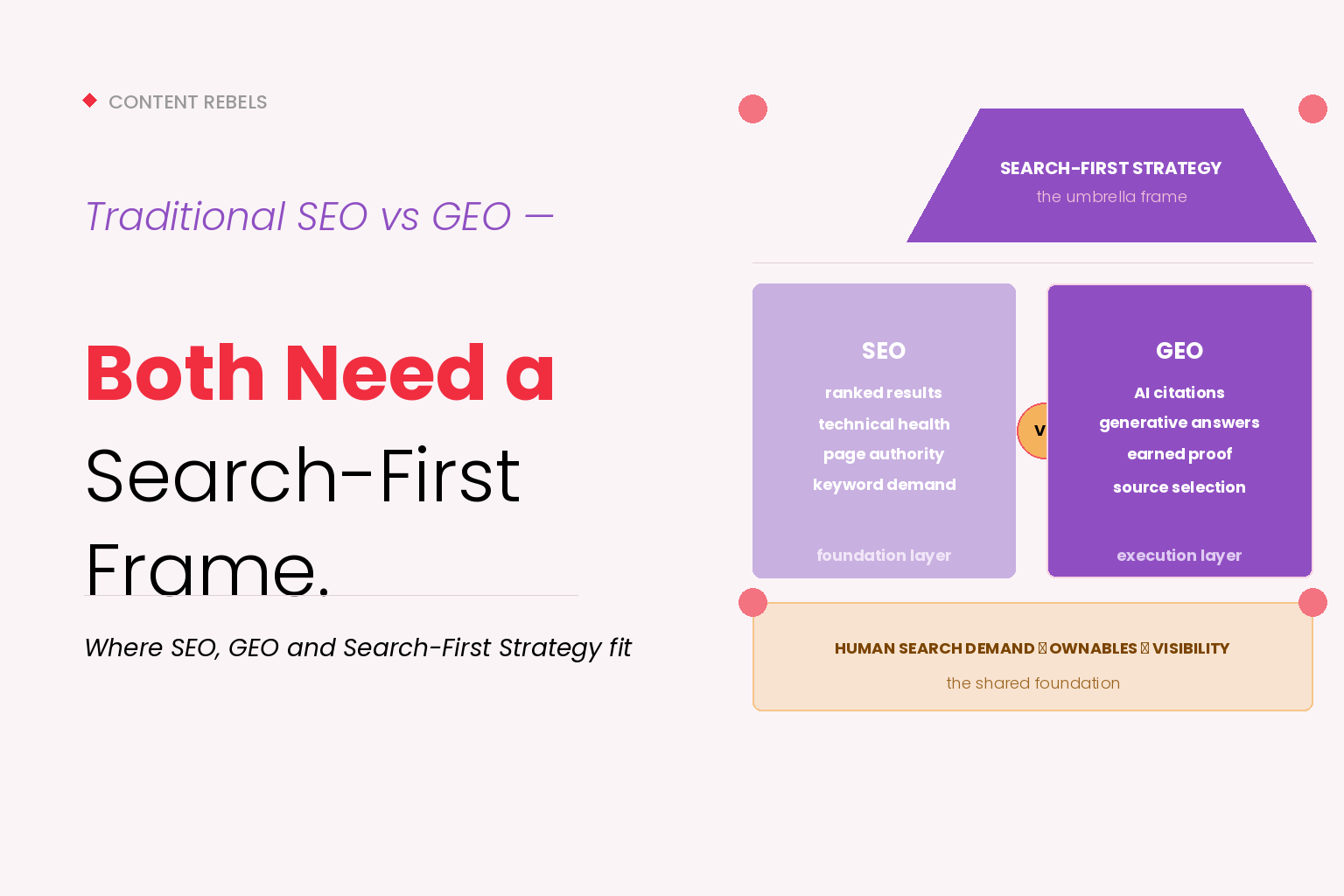
Traditional SEO helps your brand appear in ranked search results. Generative Engine Optimisation (GEO) helps your brand become part of AI-generated answers, citations and summaries. Both matter.
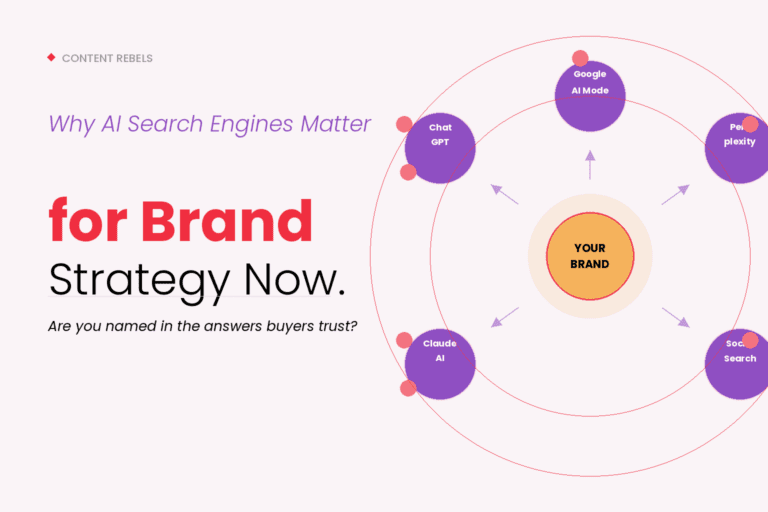
Alone, neither gives senior marketers the whole strategic layer. The wider job is to understand search behaviour across Traditional, AI and Social search, then decide what the brand should own.
That’s why a Search-First Strategy sits above both. It connects audience demand, Ownables, Semantic Entities and proof before the team decides which tactics belong in the plan. Otherwise, the work turns into SEO and GEO smushed together. Very busy. Not very useful.
A Search- First Strategy helps answer the big questions:
- What should the brand be cited for?
- Which proof deserves repetition?
- Which search moments should the team own before another content brief appears?
The Traditional SEO vs Generative Engine Optimisation comparison only becomes useful when it tells the team where to put the next dollar, hour and brief.
Traditional SEO still carries demand
Traditional SEO is still the foundation for many search journeys. StatCounter reports Google held 90.02 percent worldwide search engine market share in April 2026.
Translation: ranked search results still influence buyer demand at a serious scale.
SEO gives teams keyword demand, technical health checks, page-level relevance, authority signals and visibility in the results buyers already use. Good. Keep it. But traditional SEO reporting can miss the answer layer where AI summaries, LLM tools and social search conversations shape perception before the click.
That is where senior marketers need a bigger frame, not another fight over labels. Traditional SEO gives your brand the base layer, but AI Search changes how that base gets reused, summarised and compared. That makes SEO the beginning of the answer, not the whole presentation deck.
That shift is what sits at the core of what an AI Search Strategy means for Search-First teams.
Why the distinction matters now
The distinction matters because each practice solves a different visibility problem.
SEO helps a page compete inside ranked results.
GEO helps content become retrievable and citable inside generated answers.
A Search-First Strategy decides which ideas, proof points and buyer questions deserve that visibility in the first place. A 2025 arXiv paper on Generative Engine Optimization found AI Search systems source information differently from Google, with a stronger bias towards earned media and third-party authoritative sources.
Translation: a page can perform well in traditional search and still fail to become the cited source in an AI answer.
That gap is exactly why search strategy now needs to cover source selection, earned proof and answer framing. If the source mix has changed, the content plan has to change with it. One page ranking well is not the same as one answer naming you.
GEO is an execution layer
What is generative engine optimisation? It’s the work of making content easier for generative systems to find, interpret and cite. That may include clearer definitions, better chunking, stronger source evidence, earned mentions and machine-readable structure. Useful. But GEO becomes thin when it starts and ends with prompt tracking or citation tweaks. People may type ‘GEO generative engine optimisation’ into a search bar because the category language is messy, but the commercial problem is cleaner.
- Which answer should carry your brand?
- Which sources support it?
- Which Ownables need repetition across the market?
The questions are strategic before they are technical. That’s where many GEO offers become too small for the leadership problem they’re meant to solve. Senior marketers need a system that explains the gap, not a bag of citation tweaks.
Search-First Strategy gives both a job
Search Engine Marketing Strategies gives SEO and GEO one shared job: help the right audience find, trust and choose the brand across the places they now search. That means the team works from buyer questions and brand authority before it builds pages, schema or prompt lists.
Our Search-First Strategy Playbook frames this as an operating model, not a channel debate. It asks what the audience needs to know, what the brand can credibly own and where those answers must appear.
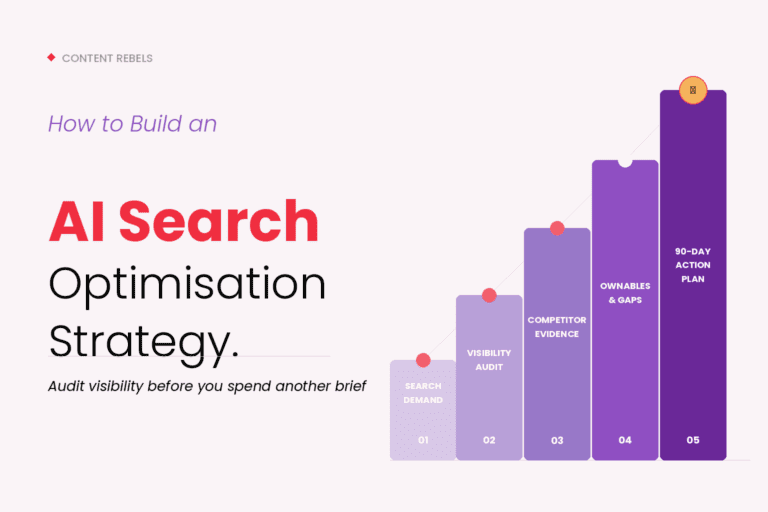
That’s the missing layer in many AI SearchContent Strategy plans. Without a Search-First Strategy, the team can create pages that look useful in isolation but fail to build a visible brand territory across platforms. This is where understanding how to build an AI Search Optimisation Strategy becomes critical: it turns the system into execution. The strategy gives every page a reason to exist and every answer a claim to support.
Nobody needs more isolated wins that cannot be explained together.
The five-row Search-First shift
| Old search mindset | Search-First mindset |
|---|---|
| Keywords | Meaning |
| Pages | Search-First Content Ecosystems |
| Traffic | Visibility and conversion |
| Content pillars | Ownables |
| Static playbooks | Responsive 90-day experiments |
The shift changes the planning conversation.
- Keywords become evidence of demand, not the whole brief.
- Pages become part of connected Search-First Content Ecosystems.
- Traffic sits beside visibility and conversion.
- Content pillars become Ownables.
Static playbooks become 90-day experiments that adapt as the data changes.
The team stops asking “SEO or GEO?” and starts asking which search behaviour the system must answer. That’s a far better question for a CMO because it links the tactic back to buyer confidence, not just channel activity. It keeps the team from mistaking a refreshed page template for a Search Strategy and gives it a reporting model that can include clicks, citations and conversion together.
How should teams compare the two?
Compare SEO and GEO by the outcome each one supports. That keeps the discussion practical and stops acronyms from eating the meeting.
SEO usually starts with existing demand, page visibility and organic clicks. GEO starts with generated answers, cited sources and brand inclusion inside responses. A Search-First Strategy starts earlier: demand, Ownables, content system and reporting.
That order matters. If the team builds GEO tactics before it knows what the brand should own, the work will be busy without becoming defensible. The team should be clear on:
- What the buyer needs to understand first
- What proof is most likely to influence the answer
- Which metric will show progress before the next quarterly review.
A useful comparison should make the next decision easier, not add three more tabs to the weekly search meeting. Start by identifying the gap:
- The site is hard to find
- The brand is missing from AI answers
- Leadership lacks a clear narrative
Different gap. Different move.
Use this decision filter
- Use SEO when your team needs stronger crawlability, rankings, intent coverage or page-level search performance.
- Use GEO when your team needs clearer citations, answer-ready structure and stronger retrievable proof.
- Use Search-First Strategy when leadership needs the whole system across Traditional, AI and Social Search.
- Avoid treating a prompt list as a content strategy because it does not define buyer demand.
- Check Share-of-AI-Voice monthly so the team sees answer-layer visibility before traffic shifts.
Use the filter as a sequencing tool. If crawlability is broken, fix the SEO base first. If the brand is visible in Google but absent from AI answers, work on citation and retrieval signals. If leadership cannot explain what the brand should own, step back to the Search-First Strategy.
Simple? Yes. That’s the point. Give each tactic a lane, then make the lanes work together.
Machine readability needs brand direction
Technical structure matters, but it still needs a brand point of view. Search Engine Land describes AI discovery as depending on retrievable structure, taxonomy, schema, internal links and chunk-level readability.
Translation: structure is part of visibility, but structure without Ownables is just neat filing.
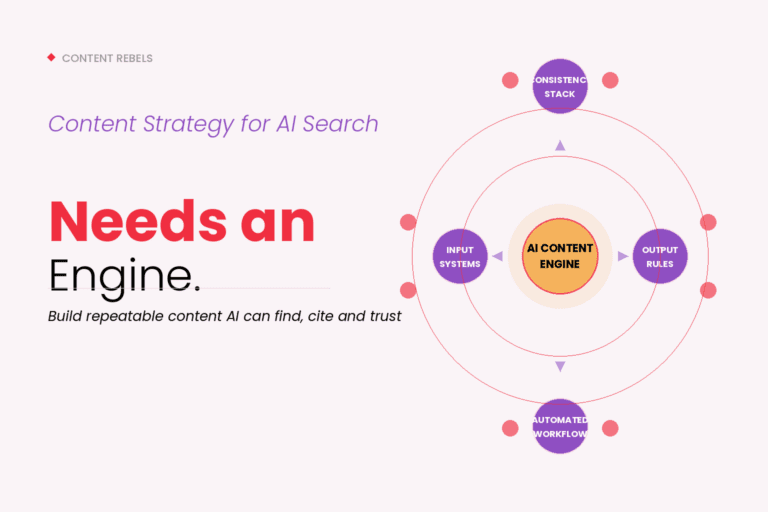
Your content still needs a clear claim, expert proof and repeated language that tells buyers and machines what the brand is known for. This is where an AI Content Engine helps. It turns the strategy into repeatable production without making every asset sound like a beige committee.
Recent arXiv research on citation absorption found high-influence pages tend to be structured, semantically matched and rich in extractable evidence.
Translation: the structure has to carry substance.
Structured RAG research also points to structured information improving retrieval, which backs the same practical direction: clearer inputs create better retrieval conditions.
How Content Rebels connects SEO and GEO
Content Rebels connects SEO and GEO through the Search-First Growth Framework. We start with search demand and visibility gaps, then define Ownables, content priorities and reporting signals. That work can lead to technical SEO fixes, GEO citation work, Digital PR and EEAT Authority, AI Visibility Tracking or an AI Content Engine.
The point is the order: Strategy first. Tactics second.
We design, build and scale the system with in-house teams so they can understand it, present it and keep using it. The handover matters because the goal is capability, not permanent dependence or a mysterious black box. Your team should know why each recommendation exists, what it supports and how it will be measured in the next reporting cycle. Your team should be able to explain the system after we leave the room. That is how internal capability grows.
Proof keeps the layer grounded
This is not acronym theatre. The same strategic spine has helped different brands solve different search problems. Healthylife achieved a 157 percent Search revenue lift through search-led content work. Affinda achieved an 87 percent AI Search traffic lift when the work connected visibility, content and proof.
That strategic spine is what sits behind why AI Search Engines matter for brand strategy now.
Translation: the channel may change, but the system still needs demand, Ownables, authority and measurement.
A Search-First Strategy gives both channels a commercial job. That job should connect visibility to demand, demand to content and content to measurable outcomes your team can defend. Proof keeps the work grounded when the market gets noisy and everyone starts selling a new acronym by breakfast. Proof turns the argument from opinion into an operating model.
The bigger layer is the point
Traditional SEO and Generative Engine Optimisation are both useful. The problem starts when one gets treated as the whole answer.
Senior marketers need a system that explains where buyers search, what the brand can own and how content becomes Discoverable, Retrievable and Citable across search surfaces. That system gives the team calm in the chaos. It also gives leadership a clearer story than “we are testing GEO”.
Search has changed. But buyers still want credible answers, and your brand still needs to be the source they trust. The label matters less than the operating model. If the work helps buyers find the right answer and helps leadership understand the plan, it belongs. If it only adds noise, it can wait.
The calmest teams will keep the useful SEO base, add the right GEO layer and organise both around Search-First priorities. That is the discipline senior marketers need when every week brings a fresh search acronym and a fresh vendor pitch.
Need the SEO and GEO comparison framework?
Download our Search-First Strategy Playbook to see how Traditional Search, Generative Engine Optimisation and Search-First Strategy fit into one operating model. Use it to brief your team, challenge a tactical proposal or bring the next leadership conversation back to buyer behaviour.
The Playbook gives you the comparison table, the audit steps and the 90-day experiment model in one place. If your team is stuck debating labels, start with the system and give every tactic a job. It saves time, energy and effort because the next conversation becomes about search behaviour, not which acronym deserves the biggest chair. The sooner the team has that model, the sooner the work can move from argument to execution. Don’t be late to the party. Start with the Playbook, then use the comparison table to sort tactics into the right order.

Founder of Content Rebels | Proud marketing and strategy nerd